
Introduction
The Earth is warming faster than ever before. Rising global temperatures are one of the most critical challenges humanity faces in the 21st century. Scientists worldwide are studying how climate change will reshape our planet in the coming decades.
By 2050, the increase in global temperature is expected to significantly impact ecosystems, economies, and daily human life. Understanding this trend is crucial for preparing for the future.
Current Global Temperature Trend
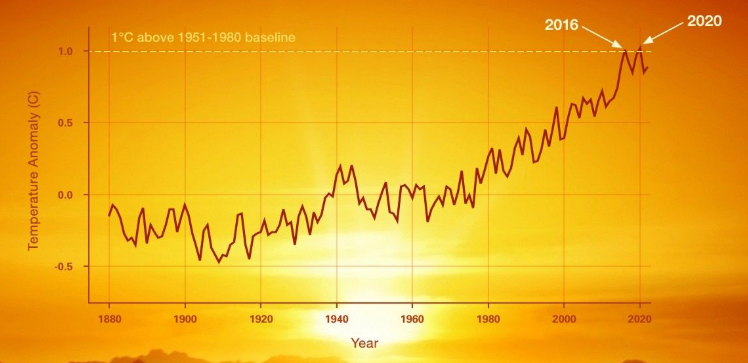
Since the late 19th century, the planet has already warmed by about 1.1°C compared to pre-industrial levels. This rise is largely driven by human activities such as burning fossil fuels, deforestation, and industrial emissions.
In recent years, the warming trend has accelerated, with scientists reporting that the rate of warming has increased to around 0.35°C per decade in the past decade, nearly double the rate observed between 1970 and 2015.
This rapid warming indicates that the climate system is changing faster than many earlier predictions.
Temperature Projections for 2050
Climate models used by organizations like the Intergovernmental Panel on Climate Change (IPCC) suggest that global temperatures will continue to rise under all emission scenarios.
Most projections estimate:
- 1.5°C warming likely to be reached between 2021 and 2040.
- The world could approach around 2°C warming by 2050 if current emission trends continue.
These numbers may seem small, but even a 1–2°C rise in average temperature can cause dramatic environmental changes.
Why Temperature Is Rising
Several human-driven factors are responsible for global warming:
1. Greenhouse Gas Emissions
Carbon dioxide (CO₂), methane, and other gases trap heat in the atmosphere. The largest source of CO₂ is the burning of coal, oil, and natural gas.
2. Deforestation
Forests absorb carbon dioxide. When forests are cut down, the stored carbon is released back into the atmosphere.
3. Industrialization and Urbanization
Rapid economic development increases energy consumption, transportation emissions, and industrial pollution.
4. Agriculture and Livestock
Farming and livestock release methane and nitrous oxide, which are powerful greenhouse gases.
Possible Effects of Rising Temperature by 2050
1. More Extreme Heatwaves
Many regions could experience longer and more intense heatwaves, affecting public health and productivity.
2. Rising Sea Levels
Melting glaciers and thermal expansion of seawater could threaten coastal cities and island nations.
3. Food and Water Challenges
Climate change may reduce crop yields, increase drought frequency, and threaten global food security.
4. Loss of Biodiversity
Many species may struggle to adapt to rapid climate shifts, leading to ecosystem disruption.
5. Economic Impacts
Extreme weather events such as floods, storms, and droughts could increase economic losses worldwide.
Can We Slow the Temperature Rise?
Yes. The future temperature increase depends heavily on global actions taken today.
Scientists suggest several solutions:
- Transition to renewable energy like solar and wind
- Reduce fossil fuel consumption
- Protect forests and plant more trees
- Improve energy efficiency
- Promote sustainable transportation
If global emissions are reduced significantly, warming could still be limited close to 1.5°C–2°C, preventing the worst impacts of climate change.
The Future Beyond 2050
Even if emissions are reduced, some warming will continue because greenhouse gases remain in the atmosphere for decades. However, strong global climate policies could stabilize temperatures later in the century.
The choices made in the 2020s and 2030s will largely determine the climate conditions people experience in 2050 and beyond.
Conclusion
By 2050, global temperatures are likely to rise significantly due to human activities. While the exact increase depends on emission levels, scientists warn that the world could approach 2°C of warming if current trends continue.
However, the future is not fixed. With innovation, sustainable policies, and global cooperation, humanity still has the opportunity to slow climate change and protect the planet for future generations.
The next few decades will decide whether the world of 2050 becomes a climate crisis or a sustainable future.