
Fossil fuels – coal, oil and gas – are by far the largest contributor to global climate change, accounting for around 68 per cent of global greenhouse gas emissions and nearly 90 per cent of all carbon dioxide emissions.
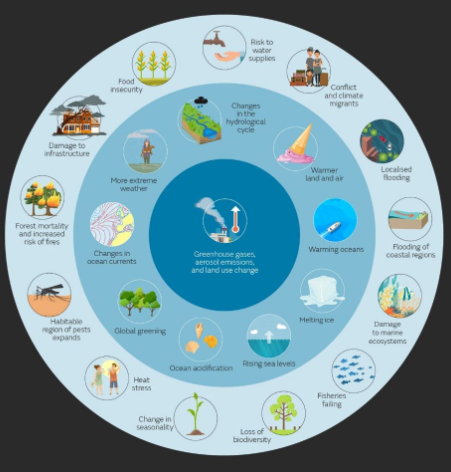
As greenhouse gas emissions blanket the Earth, they trap the sun’s heat. Because of this, the planet is warming up and the climate is changing. The world is now warming faster than at any point in recorded history. Warmer temperatures over time are changing weather patterns and disrupting the usual balance of nature. This poses many risks to human beings and all other forms of life on Earth.
Generating power
A large chunk of global emissions comes from burning fossil fuels to produce electricity and heat. Most electricity is still generated by burning coal, oil, or gas, which produces carbon dioxide and nitrous oxide – powerful greenhouse gases that blanket the Earth and trap the sun’s heat. Globally, a third of electricity comes from wind, solar and other renewable sources which, as opposed to fossil fuels, emit little to no greenhouse gases or pollutants into the air.
Manufacturing goods
Manufacturing and industry produce emissions, mostly from burning fossil fuels to generate the energy needed to make things like cement, iron, steel, electronics, plastics, clothes, and other goods. Mining and other industrial processes also release gases, as does the construction industry. Machines used in the manufacturing process often run on coal, oil, or gas. Some materials, like plastics, are made from chemicals sourced from fossil fuels. The manufacturing industry is one of the largest contributors to greenhouse gas emissions worldwide.
Cutting down forests
Cutting down forests to create farms or pastures, or for other reasons, generates emissions, since trees, when they are cut, release the carbon they had been storing. Each year approximately 10 million hectares of forest are destroyed. Since forests absorb carbon dioxide, destroying them also limits nature’s ability to keep emissions out of the atmosphere. Deforestation, together with agriculture and other land use changes, is responsible for roughly a third of global greenhouse gas emissions.
Using transportation
Most cars, trucks, ships, and planes run on fossil fuels. This makes transportation a major contributor of greenhouse gases, especially carbon-dioxide emissions. Road vehicles produce the largest part, due to the combustion of petroleum-based products, like gasoline, in internal combustion engines. But emissions from ships and planes continue to grow. Transport accounts for nearly one quarter of global energy-related carbon-dioxide emissions. And trends point to a significant increase in energy use for transport over the coming years.
Producing food
Producing food causes emissions of carbon dioxide, methane, and other greenhouse gases. This is due, for instance, to deforestation and clearing of land for agriculture and grazing, digestion by cows and sheep, the production and use of fertilizers and manure for growing crops, and the use of fossil fuels to run farm equipment or fishing boats. All this makes food production a major contributor to climate change. Greenhouse gas emissions also come from packaging and distributing food.
Powering buildings
Globally, residential and commercial buildings consume nearly 60 per cent of all electricity. As they continue to draw on coal, oil, and natural gas for heating and cooling, they emit significant quantities of greenhouse gas emissions. Growing energy demand for heating and cooling, with rising air-conditioner ownership, as well as increased electricity consumption for lighting, appliances, and connected devices, has contributed to a rise in carbon-dioxide emissions from buildings in recent years.
Consuming too much
Our lifestyles can have a profound impact on our planet. Our use of power at home, how we move around, what weeat and how much we throw away all contribute to greenhouse gas emissions. So does the consumption of goods such as clothing, electronics, and plastics. The wealthiest bear the greatest responsibility: the 20 largest economies are responsible for almost 80 per cent of global emissions.