
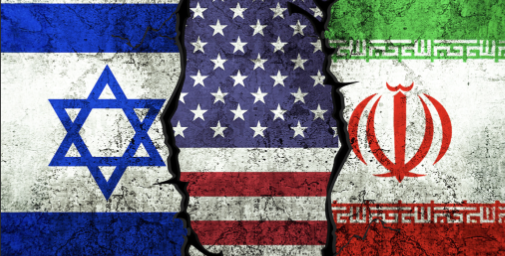
In global politics, some conflicts do not begin suddenly. Instead, they grow slowly over decades through political decisions, ideological differences, and struggles for regional influence. The tension between the United States, Israel, and Iran is one of those complex conflicts. It is not just a disagreement between nations; it is a story involving religion, geopolitics, nuclear power, energy resources, and global security.
The roots of this conflict can be traced back to the Iranian Revolution of 1979. Before this revolution, Iran was ruled by Mohammad Reza Pahlavi, known as the Shah of Iran. His government maintained strong diplomatic and economic ties with Western countries, especially the United States. Iran was considered one of America’s key allies in the Middle East.
However, everything changed in 1979 when a popular revolution overthrew the Shah’s regime. The revolution was led by religious leader Ruhollah Khomeini, who established an Islamic Republic in Iran. The new government adopted a strong anti-Western stance and openly opposed both the United States and Israel. From that moment onward, relations between Iran and Israel became hostile.
Israel is a Jewish state and one of the United States’ closest allies in the Middle East. Iran’s leadership, however, believes that Israel was established on land that rightfully belonged to the Palestinians. Because of this belief, Iran does not recognize Israel as a legitimate state. This ideological and political disagreement has been one of the main reasons behind the continuing hostility between the two countries.
Over time, this rivalry expanded beyond politics and diplomacy. Iran began supporting several groups in the Middle East that oppose Israel. Among the most well-known are Hezbollah, based in Lebanon, and Hamas, operating in Gaza. These organizations have frequently been involved in conflicts with Israel, and their activities have increased tensions across the region.
Israel, on the other hand, sees Iran as one of its greatest security threats. As a result, Israel has carried out multiple military strikes in neighboring countries like Syria, targeting locations where Iranian forces or Iranian-backed groups are believed to operate.
Another major factor intensifying this conflict is Iran’s nuclear program. For many years, the United States and Israel have suspected that Iran may be trying to develop nuclear weapons. Iran, however, insists that its nuclear activities are intended only for peaceful purposes such as electricity generation and scientific research.
In 2015, an international agreement known as the Joint Comprehensive Plan of Action was created in an effort to resolve this issue. Under this agreement, Iran agreed to limit its nuclear activities and allow international inspections. In return, several economic sanctions imposed on Iran were lifted.
However, the agreement faced major challenges later when the United States withdrew from it and reinstated economic sanctions against Iran. This decision increased tensions once again and led to a series of confrontations and indirect conflicts across the Middle East.
In recent years, the conflict between Israel and Iran has often been described as a “shadow war.” Instead of direct military confrontation, the two countries have engaged in covert operations such as cyberattacks, intelligence missions, targeted strikes, and attacks on strategic facilities. These actions have kept the region in a state of constant tension.
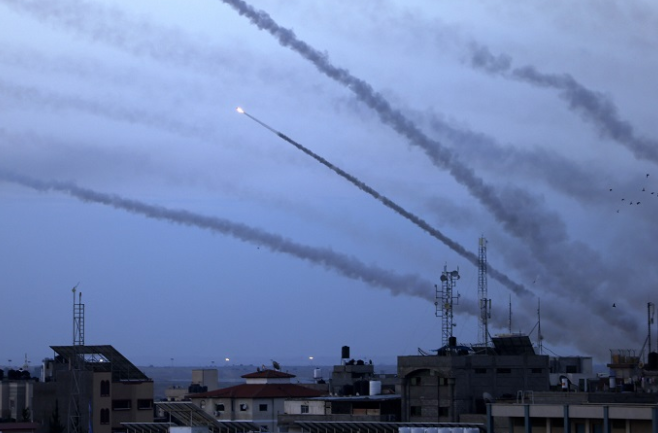
The struggle for regional influence in the Middle East also plays a significant role in this conflict. Iran seeks to expand its influence in countries such as Syria, Iraq, Lebanon, and Yemen. Meanwhile, Israel and the United States aim to limit Iran’s growing power in the region.
If a direct war were to break out between Iran and Israel, the consequences could be severe. Iran possesses a large arsenal of missiles and increasingly advanced drone technology. Israel, on the other hand, has one of the most technologically advanced militaries in the world. Its defense system, known as the Iron Dome, is designed to intercept and destroy incoming missiles, providing protection to its cities and military bases.
Beyond the immediate region, such a conflict could have significant global consequences. The Middle East is one of the world’s most important sources of oil. If Iran attempted to block the Strait of Hormuz, a vital shipping route through which a large portion of the world’s oil supply passes, global energy markets could face major disruption. Oil prices could rise dramatically, causing inflation and economic instability in many countries.
Countries like India would also feel the effects of such a crisis because they rely heavily on imported energy resources. Higher oil prices could lead to increased transportation costs, rising inflation, and economic challenges.
Experts suggest several possible outcomes for the future of this conflict. One possibility is that diplomatic negotiations and international pressure could reduce tensions and prevent a large-scale war. Another possibility is that smaller regional conflicts could continue without escalating into a full-scale confrontation. However, there is also concern that if tensions spiral out of control, the conflict could involve multiple countries in the Middle East and create a broader regional crisis.
For now, many global powers are working to prevent such an escalation. In today’s interconnected world, a major war would not remain limited to a single region. Its economic, political, and humanitarian consequences would be felt across the globe.
In conclusion, the conflict involving the United States, Israel, and Iran is not simply a dispute between nations. It is a complex story shaped by history, ideology, strategic interests, and global power dynamics. The direction this conflict takes in the coming years will depend largely on diplomacy, international cooperation, and the choices made by world leaders.