
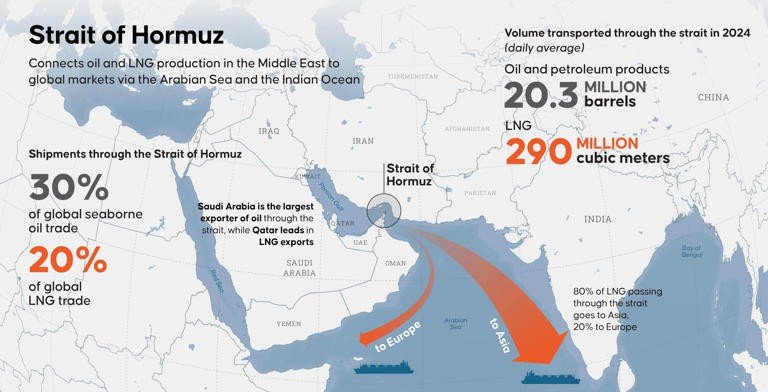
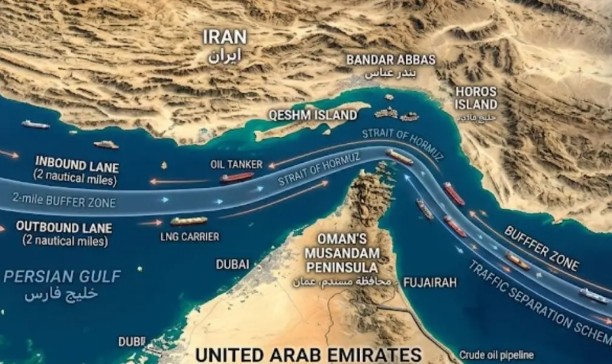
The world is once again facing a serious energy shock, and this time the center of the crisis is the Strait of Hormuz. Often called the most important oil chokepoint in the world, this narrow waterway carries a massive share of global energy trade. Any disruption here doesn’t just affect one region—it shakes the entire global economy.
Why the Strait of Hormuz Matters So Much
The Strait of Hormuz connects the Persian Gulf to the Arabian Sea and is the main export route for oil-producing countries like Saudi Arabia, Iran, Iraq, Kuwait, and the United Arab Emirates. A huge percentage of the world’s crude oil and liquefied natural gas moves through this single route every day.
Because of its importance, even a small conflict or military tension can cause oil prices to rise sharply, stock markets to react instantly, and shipping routes to become unstable.
The 22-Nation Coalition Steps In
As tensions rise in the region, a 22-nation coalition has reportedly started working together to secure oil shipments and protect commercial vessels passing through the Strait. This includes naval patrols, surveillance operations, and emergency response strategies to prevent supply disruptions.
The involvement of multiple countries shows just how critical the situation has become. Governments are trying to avoid a global energy crisis similar to the oil shocks of the past.
How This Crisis Is Affecting the Global Energy System
The impact of the Strait of Hormuz crisis is already being felt worldwide:
- Oil price volatility is increasing due to supply fears
- Shipping delays are affecting global trade routes
- Energy-dependent economies are facing new risks
- Inflation pressure is rising in many countries
Major oil-importing nations are now looking for alternative supply routes and strengthening their strategic reserves to reduce risk.
What This Means for India
For a country like India, the crisis is particularly serious. India depends heavily on imported crude oil, and a disruption in supply could increase fuel prices, transportation costs, and overall inflation.
At the same time, the crisis also highlights the urgent need for India and other countries to invest more in renewable energy, electric mobility, and long-term energy security strategies.
A Glimpse Into the Future of Energy Security
The Strait of Hormuz crisis is not just about geopolitics—it is also about the future of global energy. Experts believe that such disruptions will become more common in the coming decades due to geopolitical competition, climate policies, and energy transition challenges.
This situation clearly shows why the world must move toward diversified energy sources and stronger international cooperation.
Final Thoughts
The Strait of Hormuz remains one of the most sensitive points in the global energy system. The decision of 22 nations to step in and secure oil supply shows how fragile the current energy structure really is.
If the crisis continues, it could reshape global energy markets, change geopolitical alliances, and accelerate the shift toward renewable energy.