
How the 2026 Iran War Is Shaking the Global Energy System
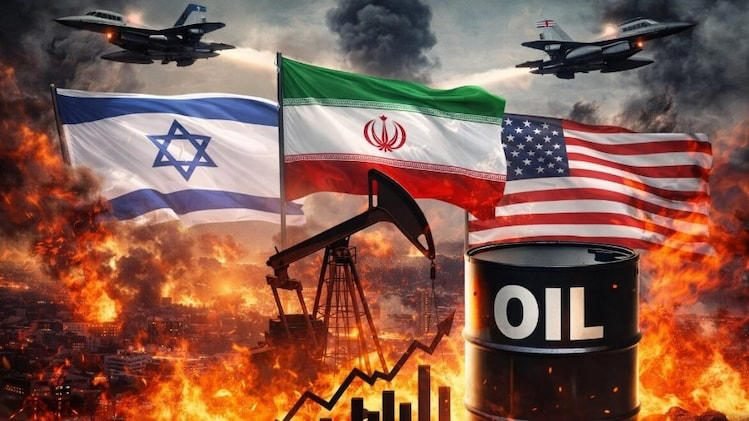
The relationship between oil and war has always shaped world politics, but the 2026 Iran war has turned that relationship into a full-scale global economic shock. The conflict between Iran, the United States, and Israel is no longer only a military confrontation—it has become an energy crisis that is affecting every country, from Europe to India.
Current Impact of the 2026 Iran War on Oil
The war has caused one of the biggest disruptions in the history of the global oil market. The most important reason is the closure and military tensions around the Strait of Hormuz, one of the world’s most critical oil shipping routes.
According to recent reports, tanker traffic through the strait dropped drastically after attacks on ships and threats from Iran. The Strait of Hormuz normally carries around 20% of the world’s oil supply, and even a temporary disruption creates panic in global markets.
Because of this disruption, oil prices quickly surged past $100 per barrel and even crossed $120 at peak levels, the highest price in years. Analysts are warning that if the conflict continues, the world could face a major energy shortage and another global inflation wave.
The war has also directly targeted energy infrastructure. Major strikes were carried out on Iran’s oil and gas facilities, including attacks on the South Pars gas field and the Kharg Island export hub, which are among the most important energy centers in the country. Even partial damage to these facilities immediately affected global supply and increased market volatility.
Emergency Measures by the World
To control the crisis, the International Energy Agency (IEA) announced the largest emergency oil release in history. Countries agreed to release hundreds of millions of barrels from strategic reserves to prevent a complete supply collapse.
However, experts believe this is only a short-term solution. The world consumes more than 100 million barrels of oil every day, so even a massive reserve release can only stabilize prices for a limited period. If the war continues, the impact will become much more serious.
Why Oil and War Are Connected
The connection between oil and war is not new. Historically, wars have been fought either to control oil resources or to stop other countries from controlling them.
There are three major reasons why oil and war are so closely linked:
1. Strategic Control
Countries try to control oil-rich regions because energy means economic and military power. Whoever controls oil supply can influence the global economy.
2. Economic Pressure
During wars, oil prices become a powerful weapon. When supply is disrupted, prices rise, and this weakens the economies of other countries.
3. Funding the War
Oil revenue allows countries to continue fighting even when their economy is under pressure. This is why energy infrastructure often becomes a major target during conflicts.
Impact on India and the Global Economy
Countries like India are especially vulnerable because they depend heavily on imported oil. When oil prices rise, transportation costs increase, food prices increase, and inflation becomes difficult to control.
Experts are already warning that if the Strait of Hormuz remains blocked for a long period, the world could face:
- A global recession
- Higher fuel prices in almost every country
- Rising food and transportation costs
- Stock market instability
- Energy shortages in developing countries
The 2026 Iran war is therefore not just a regional conflict—it is a global economic event.
Conclusion
The 2026 Iran war shows once again that oil is not only an energy resource; it is a geopolitical weapon. The conflict has already caused historic price volatility, disrupted global shipping routes, and forced emergency action from major economies.
If the war continues, the world may enter a new phase where energy security becomes the most important issue for every country. The relationship between oil and war has never been more visible than it is today.